
Grace Moore
Grace Moore is not afraid to ask difficult questions — about faith, identity, love, self-worth, and what it truly means to find your place in the world. Blending soul, indie, folk and pop into deeply personal songs, the UK singer-songwriter opens up like few artists do today.
With her upcoming EP Light In A Jar and powerful new single “Moth To A Flame”, Grace explores the tension between vulnerability and visibility, spirituality and queerness, heartbreak and healing. In this interview, she reflects on her artistic journey, the emotional weight behind her songwriting, and the importance of embracing every part of who you are.
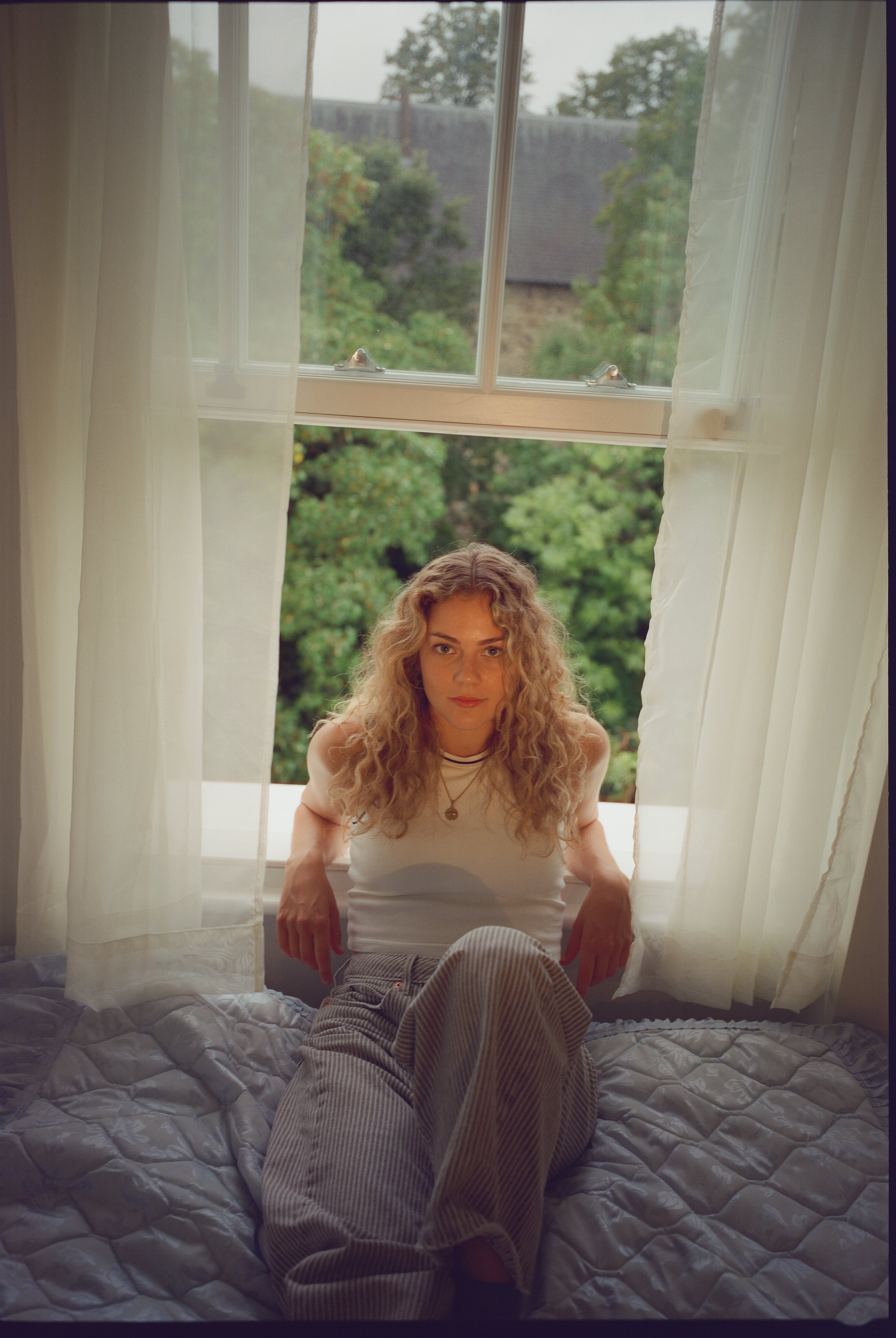
Photo credit: Isabelle Offer
Hi Grace, how are you? What's your story?
Hiya, nice to chat to you! I’m good, thanks. That’s such a big question haha. I’m from Wigan originally, and I’ve been in London for the last couple of years trying to build something as an artist. It started with me writing songs in my room, and now it’s grown into performing, releasing music, and figuring out who I am through it.
Your new single “Moth to a Flame” is your upcoming single — could you describe the songwriting/production process behind this single? Who helped you create it?
For sure. I remember thinking about U2 the day I made the demo for this one. My dad’s a big fan and he took me to see them at the Sphere in Las Vegas, so I had that in my head. I wanted this big, soaring chorus that could fill a room. It’s the opening track on the EP, so I wanted it to feel like “boom”, we’re in.
I initially took it to Matt Rist for production, but I think I was a bit all over the place that day. I ended up making the whole project with SOAP, Karl Ziegler and Josh Noble, which gave everything a real sense of cohesion.
A lot of the writing on this EP happened quite indirectly. I would go into sessions, not love what came out of them, then go home and write something new using a line or a feeling that had come up. This song was a bit like that. I think it came after a day hanging out and playing music with my friend Serena.
What does this song represent for you at this point in your journey?
I never really bothered with social media as a teenager, but when I started pursuing music I realised you’re expected to be visible all the time. It’s made me a lot more chronically online than I’d like, and quite anxious. There were times it felt like there was this whole alternate universe online, and I think I started to lose myself in it. It genuinely felt a bit mad.
I wrote this while thinking about someone I still had feelings for but wasn’t speaking to, and the urge to check what they were doing on Instagram even though I knew it wouldn’t help.
Your upcoming EP Light In A Jar was written after your time in Los Angeles — how did that experience shape the themes and sound of this project?
The cover of the EP is me sat in a shopping trolley. That wasn’t planned. I was out taking photos with my friend Izzy Offer and we just found it in a park. At the time I’d basically run out of money to make anything more polished, but when I looked back at the photos it felt weirdly accurate.
This EP was written by a girl who didn’t really know who she was or what she was worth. I’d just spent nine months in LA at Stargate’s ‘pop star school’, surrounded by people chasing success, overhearing conversations about fame, image, and who was who. Then I came back to London and got picked up by Oasis’ management company, and I felt a lot of pressure to succeed whilst navigating a lot of hurt and change.
I think I started to see myself as a product to shape and sell. My story, my pain, even how I looked. It felt like if I could package it right, it might mean something to people. You can hear that in the sound. It’s polished, quite pop, while the lyrics are more unhinged at times.
I’d been exposed to a lot of new things in LA as a young adult: sex, addiction, narcissism. At the same time, I was discovering my identity as a lesbian without the support of my Christian community. I think part of me wanted to make the melodies catchy and fun, not only so they might get played on the radio, but as a way to create some control against how out of control everything felt in the lyrics.
You blend soul, indie, folk and pop in a very seamless way — how did you develop that sound, and who were your early influences?
I always gravitated towards more acoustic, singer-songwriter or country music growing up, artists like Lady A or Brett Eldredge. My dad loves music and would play bands like U2 or Coldplay in the car, so I was always around those big, melodic songs as well.
I also spent a lot of time in church, singing CCM and gospel music. That’s really where I learned how to perform, and I used to sing harmonies with my sister, which has shaped a lot of how I hear music now.
When I got to university, I started thinking more intentionally about how I wanted to sound as an artist, and I became a big fan of Maggie Rogers and classic songwriters like Carole King. I think that was a turning point in realising you don’t have to sit in one genre, you can let everything you’ve grown up with exist in the same space.
Your lyrics feel very direct and emotionally honest. Do you find writing to be more of a release, or a way to process things over time?
If I’m writing on my own, I like the lyrics to come out in a sort of stream of consciousness, so it definitely feels like a release. It can be something really current, or something I didn’t realise I was holding onto from the past.
I think it often starts as a release, and then over time it becomes a way of understanding what I was actually feeling.
You’ve spoken about navigating your identity as both Christian and gay — how has that journey influenced your music and your relationship to yourself?
I think I started this solo project as a way to process the fact that I was gay. It felt too big and too personal to explore in my previous duo with my sister, LASS. Nothing is really off the table in my writing, so both my faith and my sexuality naturally became part of it because they’re both such core parts of who I am.
I’m still growing into knowing and loving myself. God is a mystery I’ll probably spend my whole life exploring, but I find that knowing Jesus helps me day to day, so it’s a personal pursuit to stay close to him and become more like him.
I love being a lesbian. Discovering that part of myself has helped me understand who I am and how I show up in the world. And my girlfriend is amazing, I feel really lucky that I get to do life with her.
Was there a specific moment or turning point where you felt things begin to shift in terms of self-acceptance or faith?
There have been a few turning points along the way. Last year I was really drawn to Jon Bellion’s album FATHER FIGURE, especially the piano version of the song Wash. It really spoke to me.
I ended up performing it at one of my gigs and, during the instrumental, I wrapped myself in a lesbian flag. As I stood there looking out at my girlfriend in the audience, it stopped feeling like a performance and more like a moment of worship.
I felt this sense of grace wash over me. The closest way I can describe it is like the prodigal son being welcomed home and wrapped in his father’s cloak.
What message would you give to queer Christians out there?
First of all, hi. Do you need a friend? Because honestly, being a queer Christian can be such a lonely experience.
If you’re on the journey of accepting yourself and embracing your faith, I’d say try to find affirming spaces or people. They do exist, even if they’re not always the loudest voices online or in some churches.
I’d also encourage people not to be afraid of questioning parts of their faith that don’t feel right. Curiosity isn’t a flaw. Strong faith can hold doubt, and God can too. I really hope no one feels like they have to live in fear or suppress an innate part of who they are.
And if you’re queer and curious about faith, I just want you to know your queerness doesn’t count you out. There’s a world where you can be both queer and Christian, and I’m living in it.
Looking back at your debut EP 3am in LA, what do you think has evolved the most in your artistry since then?
Aw I love 3am in LA, I had a sing along to it in the shower the other day.
There’s something really special about the first project you make. At the time of writing it, it felt so groundbreaking to me. By the time I released it, I think I’d lost a bit of steam, so I regret not fully enjoying that moment or pushing it further. I also wasn’t really ready to open up about the messages behind the songs yet.
I remember not even posting about my song ‘I Still Believe In God’, which feels like the prelude to ‘Religious’ now. That’s pretty different to running a whole social media campaign around queerness in the church this time around. I think the biggest evolution has probably been confidence, both in myself and in what I want to say.
I had a lot of freedom to experiment on Light In A Jar. It feels like a project where I was really testing my boundaries sonically and lyrically. I think I needed that to figure out who I was, what sounds I connected with, and what I actually stood for as an artist.
Looking back, it feels a little messy to me, but in a good way. It feels like someone in the middle of becoming themselves. I think the next project will feel more grounded and self-assured because of that.
As an artist, what is the hardest part? And what is the best part?
I think comparison is probably the hardest part. It’s hard to stay in your own lane sometimes and remember that what you’re doing matters, instead of jumping ship trying to compete with everyone else. I guess that’s kind of the message of Moth To A Flame. We get distracted by what other people are doing and pulled towards lives we think look better, but most of the time we have no idea what the reality actually looks like behind the surface.
The best part is definitely performing live. I just love singing and playing for people. It feels like the real payoff after spending so much time writing and overthinking everything on your own. Live shows force me to be present in the room instead of distracted or stuck in my head. Wow, I’m really managing to tie everything back into this moth to a flame idea aren’t I haha.
With Light In A Jar on the way, what do you hope listeners will take away from this new chapter of your music?
This project is pretty vulnerable. At its darkest, it reveals my suicidal thoughts. I sing the line, “last night, I asked Jesus if I could come back home,” which came from a really low place in my life. I hope listeners who’ve experienced similar feelings might feel seen and a little less alone through these songs.
At the same time, the journey of Light In A Jar is really about finding the inherent worth that always existed inside of myself and all of us. When I was struggling with my faith, I felt like I’d lost my light. The journey of the EP is me looking for that light, or really for love, in all the wrong places before eventually trusting God with my sexuality. When I did that, I met my girlfriend, my family started to accept me, and things really changed for me.
Maybe listeners will be able to find themselves somewhere in my story and think about where their own inner light comes from. Even though the project goes to some heavy places, I also hope people find joy, humour, and warmth in it too. There are definitely some upbeat moments on there as well.
What biggest life lessons have you learned so far?
Hmmm… life is very messy and boring and joyful all at once. Forgiveness is hard. People suck sometimes. Running is good for the soul. Salmon and broccoli is a top tier meal. Be kind. Keep dancing. Impress seven-year-old you. Make your life big and beautiful so grief doesn’t eat you alive.
And honestly, if everyone around you is gay and neurospicy, there’s probably something you should look into there.
Connect with Grace: