
Julia Gartha
Moving to Los Angeles to pursue her musical dreams brought Julia Gartha new opportunities, but also moments of uncertainty, homesickness, and a complicated relationship with music itself. On her deeply personal EP California’s Killing Me, the Canadian singer-songwriter captures the feeling of being caught between where you’ve been, where you are, and where you hope to go. Alongside her work as a backing vocalist for some of today’s biggest artists, Julia continues to carve out her own path, learning to embrace change, trust herself, and find meaning in the little things along the way.
I caught up with her to talk about the stories behind the EP, navigating the ups and downs of the music industry, and learning to be present even when the future feels uncertain.
California’s Killing Me is available now everywhere.
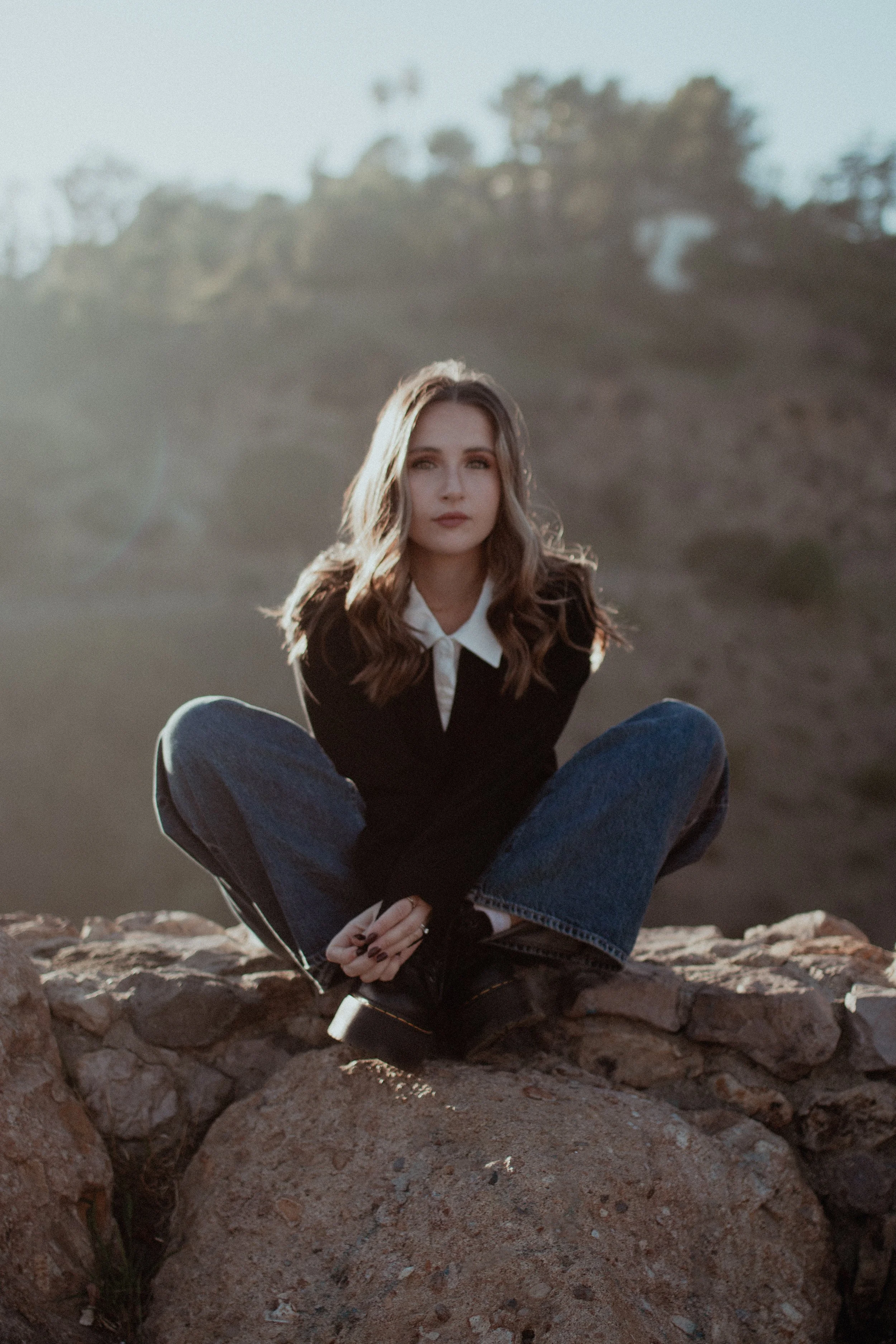
Photo Credit: Cody Encinas
Hi Julia, how are you? What’s your story?
Hello hello! Where do I even begin? My story might be too long to put in this question, but just know we’re finally at the part that gets good!
California’s Killing Me explores feeling caught between the life you have, the life you miss, and the life you want to build. What inspired you to turn this chapter of your life into an EP?
I felt like everything I was writing had this general theme without even trying. The EP wrote itself, and that’s such a bizarre feeling. At the time I didn’t realize what my subconscious was going through, but when you listen top to bottom, it’s such a distinctive chapter.
You wrote these songs during a period of stagnation in Los Angeles. How did that feeling affect your creativity and your relationship with music?
It made music feel like a friend I had a falling out with. Something I used to love that was so easy- turned into a job that was sometimes rewarding, but mostly made me feel fatigued and bad about myself. I’ve seen my relationship with music turn around, but it was a dark time at one point.
On “Not In The Room,” you explore distance and the feeling of not receiving as much as you give in a relationship. What did writing this song teach you about love and knowing your worth?
It didn’t teach me anything I didn’t already know, but I was surprised by how many people connected with this song. From relationships that went sour to best friend breakups and family moving away, people found so many different ways to relate to its themes.
“Itching for Change” captures the desire to move forward, even when you don’t know what comes next. How do you deal with uncertainty when you feel ready for a change?
I’m still figuring it out, but I’ve learned that taking on the small things helps. Uncertainty is part of being human, but making tiny, positive changes every day can add up over time and eventually snowball into something bigger.
Homesickness and nostalgia are important themes throughout the EP. Has living far from home changed the way you see where you come from?
Absolutely. Ever since moving to LA, I’ve found myself romanticizing my hometown, and my pride in being Canadian has only grown with time away. A lot of people see Canada as an extension of the States, but that couldn’t be further from the truth.
Moving to a new place to pursue a dream can be exciting, but also lonely. How do you take care of your mental health when life doesn’t turn out the way you expected?
I have an amazing group of friends that constantly keep me grounded and check in on me regularly. I’m super lucky to have that in LA because it can be so isolating.
Have you ever felt pressure to keep going with a particular dream simply because you’ve already invested so much time and energy into it?
Sometimes I have those thoughts, but it would be a shame to quit now when I’m just starting to make headway. Honestly, if I were good at anything else, I might give it more consideration, but I’ve never doubted that this is what I’m meant to do. So I’ll keep trekking along.
What has this chapter of your life taught you about the difference between being patient with yourself and knowing when it’s time to move on?
Honestly, it’s taught me that I need to start trusting the universe and stop listening to my intrusive thoughts so much.
Looking back at your journey so far, what is one lesson you’ve learned about yourself that you wish you had understood earlier?
I wish I hadn’t given my own thoughts so much power. What you tell yourself has a huge impact on your confidence and how you move through the world, and I didn’t understand that when I was younger. Positive affirmations might get a bad rap for being cheesy, but they really do work. I also wish I’d realized sooner how much gratitude for the little things can change your everyday life, whether it’s a new season of Real Housewives, morning coffee, or a good gluten-free bagel.
You’ve built an impressive career both as a solo artist and as a backing vocalist for artists like Harry Styles, Chappell Roan, Olivia Rodrigo, and Sabrina Carpenter. How do these different experiences influence the way you approach your own music?
It’s honestly so inspiring to be around. Being part of another artist’s project reminds me how difficult this work can be, while also reinforcing that everyone’s journey is different. There’s no clear-cut path to “success”—it’s about how you define it for yourself and how hard you’re willing to work to keep going.
You’ve also collaborated with artists and songwriters across different projects and genres. What have these experiences taught you about collaboration, and about finding your own artistic identity?
I’ve learned that collaboration is nearly impossible when you don’t vibe with the people you’re working with. My best songs have come from working with people I genuinely enjoy being around. No matter how long you’ve known someone, you have to stay humble and willing to listen. There’s a certain surrender that needs to happen in a session, and if you walk in thinking you know everything, the art you make won’t feel authentic.
Your songs have reached a huge audience through social media, with hundreds of thousands of Reels created using your music. How do you feel about the way social media has changed the music industry, particularly for independent artists?
The way I feel depends on the day. I think it can be awesome, and such a great tool for new people to find you. So many listeners have latched onto my project because of reels, but it also can be daunting to keep up the releases once you start seeing traction
The music industry can make it easy to compare your progress with everyone else’s. How do you navigate that pressure while staying connected to your own goals and definition of success?
I’m still figuring out how to navigate it. I get caught up in comparisons all the time, and the only thing that’s worked is throwing my phone across the room when I start to spiral. But somehow, the cycle always finds a way to start back up again!
If you could go back and give your younger self, who was writing songs at 12, one piece of advice about life or the music industry, what would it be?
Stop thinking! Just do!!
With California’s Killing Me marking such a personal chapter in your life, what do you hope listeners take away from it — especially those who might also be questioning where they belong or what comes next?
I hope listeners can either escape their own reality through this EP or find comfort in the experiences we share. Above all, I want them to remember that if you spend your whole life questioning what comes next, you’ll miss where you are right now.
Connect with Julia: