
Ren Genevieve
Some songs are born from melodies, others from moments that stay with us long after they happen. For NYC-based singer-songwriter Ren Genevieve, songwriting is a way to make sense of those moments, especially the ones that leave us searching for clarity.
With her new single “Slowly Fading,” Ren explores the emotional uncertainty of an undefined relationship, capturing that complicated space between wanting answers and being afraid of what those answers might change. Blending intimate storytelling with gentle guitar, piano and atmospheric production, the song reflects Ren’s ability to turn unresolved emotions into something deeply relatable.
With a background in classical voice and musical theatre, and a love for artists such as Beyoncé, Taylor Swift and Miley Cyrus, the artist brings together powerful vocals, honest songwriting and a strong instinct for storytelling.
Ahead of her upcoming EP, Ren sat down with me to talk about “Slowly Fading,” emotional honesty, her creative influences, her journey as an artist, and what she hopes listeners will find within her music.
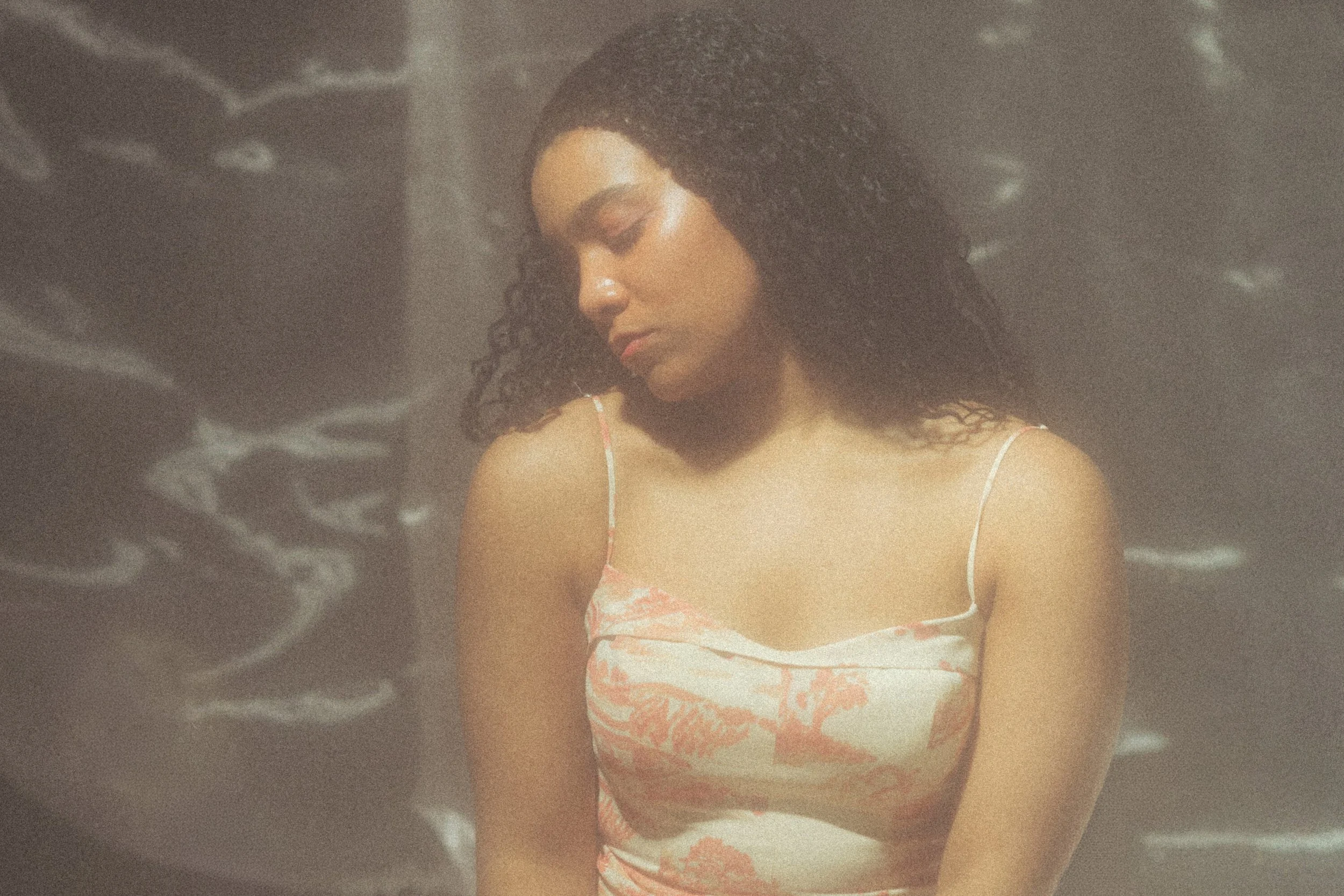
Hi Ren how are you? What’s your story?
I’m doing well, so excited to be speaking with you! I’m a singer and songwriter based in NYC. I love music. I love to sing and I love to tell stories.
Your new single “Slowly Fading” explores the uncertainty of an undefined relationship. What inspired you to tell this particular story through music?
It started with text messages. One of those relationship-defining (no pun intended) conversations where one person was really wanting clarity and getting nothing from the other person. It was a conversation that really stuck with me, and I felt like I needed clarity, so I started writing. That’s kind of my go-to in any life situation that feels unclear.
You described the song as “a raw reflection on wanting clarity while fearing what it might change.” Why do you think uncertainty in relationships can inspire such powerful emotions and creativity?
I think people like to feel understood. Uncertainty can happen when someone doesn’t understand you or vice versa, and this really leaves you searching for answers that will resolve the dissonance that uncertainty can create. Not knowing can either be thrilling or terrifying. Either way, those are really strong emotions, so it creates this heightened emotional environment that leads to creativity.
The song balances emotional intensity with restraint. How did you approach creating a track that feels vulnerable while still leaving space for the listener’s own interpretation?
I’m always thinking of the story and what will serve the song best, and Josh approaches producing in a similar way. For this song, it was really important to let the storytelling and emotional intensity shine. So we really let the song guide the production process and focused on making every choice intentional, which helps to allow space for the listener’s own interpretation.
Can you tell us about the songwriting process behind “Slowly Fading”? Did the lyrics come from a specific moment, or did the story develop over time?
The lyrics were inspired by text messages. I was really interested in building a song around the “what are we?” question. And, I used the first few messages as inspiration to build out the chorus, and the concept for the story really grew from there. I was interested in exploring the cyclical and inevitable feeling of a “situationship.”
The track features soft guitar, gentle piano melodies and atmospheric production. How did you work with producer Joshua Monroy to create the emotional atmosphere of the song?
Josh was really the perfect producer to work with on this. He really understood what I was trying to do with the demo. He could also hear some of the country influences in the writing and really leaned into that when creating the emotional atmosphere of the song. He immediately got that balance of emotional intensity and restraint, that “push-and-pull” feeling. We really simplified some of the instrumentation that was in the demo, adding moments of slide guitar, and adding live drums on this track. The drummer was absolutely fantastic! The live drums just added the perfect amount of emotional intensity so that the rest of the track could be a bit more restrained.
Your music often explores unresolved emotions and moments that are difficult to express. Why is songwriting such a powerful way for you to process and communicate those feelings?
I really love music. I have loved music for as long as I can remember. So, it’s really the natural place that I go when I’m trying to understand or communicate how I’m feeling. It’s really my connection to music and storytelling that makes songwriting the vessel for processing and communicating these unresolved emotions and moments.
You started performing at a very young age and later studied classical voice at the Manhattan School of Music’s Pre-College Program before studying musical theatre at NYU’s Tisch School of the Arts. How have these experiences shaped the artist you are today?
My training at MSM really shaped my understanding of music and how I think about writing. My training at NYU really expanded my ideas about creativity and storytelling, and helped me to explore my artistry as a singer/songwriter. It also forced me to always try new things and make new choices, which really impacted my willingness to make choices that serve the story best while also being truthful. Both of these programmes taught me an immense amount of discipline and commitment, which shape how I approach creating as an artist now.
Your background in musical theatre has clearly influenced your love for storytelling. How does thinking like a storyteller impact the way you write songs?
I think that my background in musical theatre gave me an instinct for emotional truth, finding the moment that needs to be sung. But I don’t really think about it actively when I’m writing. I think this is really present in the times when I’ve needed to edit a song. This is where that instinct really comes into play.
You draw inspiration from artists like Beyoncé, Taylor Swift and Miley Cyrus. What qualities do you admire most in these artists, and how have they influenced your own creative journey?
They really are massive inspirations for me. Miley Cyrus inspired me to play guitar. My very first guitar was a pink Daisy Rock because Miley played a pink Daisy Rock on Hannah Montana. I also really admire Miley’s authenticity. Through all of her albums, she has always stayed committed to her creative vision. She is also an incredible singer and writer, which is another source of inspiration for me! Taylor Swift inspired my love of storytelling and country music. My introduction to Taylor Swift was her Fearless era, and this was around the time that I was beginning guitar lessons. I was playing through her album, and subsequently began listening to other country music and playing those songs. This early exposure to country music really influenced how I approach songwriting. As for Beyoncé, Adele really said it best, she is the “artist of my life.” She is such an important part of my growth as a singer and artist. I truly can’t remember a time when I wasn’t listening to Beyoncé. Her musicality is otherworldly. Her vocal ability and agility have always been huge sources of inspiration for me. I learned how to riff by listening to Beyoncé. She makes such interesting and unexpected musical choices, and is ever-evolving. She is so driven by her love for the craft and is constantly looking for ways to make new choices. In addition to her musical abilities, she is a phenomenal performer. She is able to command a stage in a way that feels both powerful and intimate. Her ability to balance these two things is deeply inspiring.
Every artist has moments of self-doubt. How do you stay connected to your own voice and authenticity while growing as an artist?
I stay connected to my love of singing, which is really where this all started, and my love of the creative process. I really do love making music. So, if something feels off, I go back to those things.
Many listeners connect with songs because they feel understood by them. What do you hope someone experiencing a complicated relationship will feel when they hear “Slowly Fading”?
I hope that people will feel less alone in that moment when two people see a relationship in different ways. That can be a really difficult, lonely feeling, but it is something that is a universal experience. I hope that people feel understood in that uncertainty and in that moment when you realise that you can’t continue the relationship in the way that it has been.
Beyond music, you enjoy acting, reading, baking and traveling. How do these other creative and personal experiences influence your songwriting?
They really do influence my songwriting. I’ve done a lot of travelling this summer. When I travel, I love to visit art museums. This summer, I found some of the stories behind the paintings to be really inspiring for songwriting. Because I also love to act, I watch a lot of film/tv. I love to use these as songwriting exercises. What if I wrote a credit song for this film? What if this moment in a tv show was a song? I have a lot of fun writing those!
Mental health and emotional honesty are becoming increasingly important conversations among artists and listeners. How important is it for you to create music that reflects real emotions, even the uncomfortable ones?
There is such beauty in all of the emotions that we experience, especially the uncomfortable ones. For me, writing is often how I’m figuring out how I’m feeling about something or gaining perspective about something, so emotional honesty is really the heart of my writing. I want to capture the emotional moment through my writing.
As you prepare to release your upcoming EP, how would you describe the journey listeners will experience throughout the project?
I think of the songs as different paintings in the same exhibit. Each song explores different moments from the same period of my life. I want listeners to connect to the emotional core of the songs and see themselves in these experiences.
Looking ahead, what is something you hope to explore or discover about yourself as an artist?
I hope to explore more musical choices and discover new ways to approach songwriting and storytelling. I also really hope to discover how these songs transform live in front of an audience. With recorded music, it’s really cool to see how songs can take on a new life when they are performed live.
Connect with Ren: