
sophie-lou
After spending 14 years singing with the Danish National Girls’ Choir and exploring different musical worlds, from classical composition to ambient and electronic music, Danish artist sophie-lou has found her own space through deeply personal and emotionally driven songwriting.
Following her debut EP It’s easy to be soft, she returns with “2026 we’re in heaven”, a new single exploring the complexities of intimacy, desire and the emotional highs and lows of human connection in an increasingly disconnected world.
Blending layered vocals, evolving electronic textures and raw vulnerability, sophie-lou continues to push her creative boundaries while turning personal experiences into something deeply relatable. We caught up with her to discuss her musical journey, the stories behind her latest release, the importance of vulnerability, and what lies ahead in 2027.
“2026 we’re in heaven” is available now !
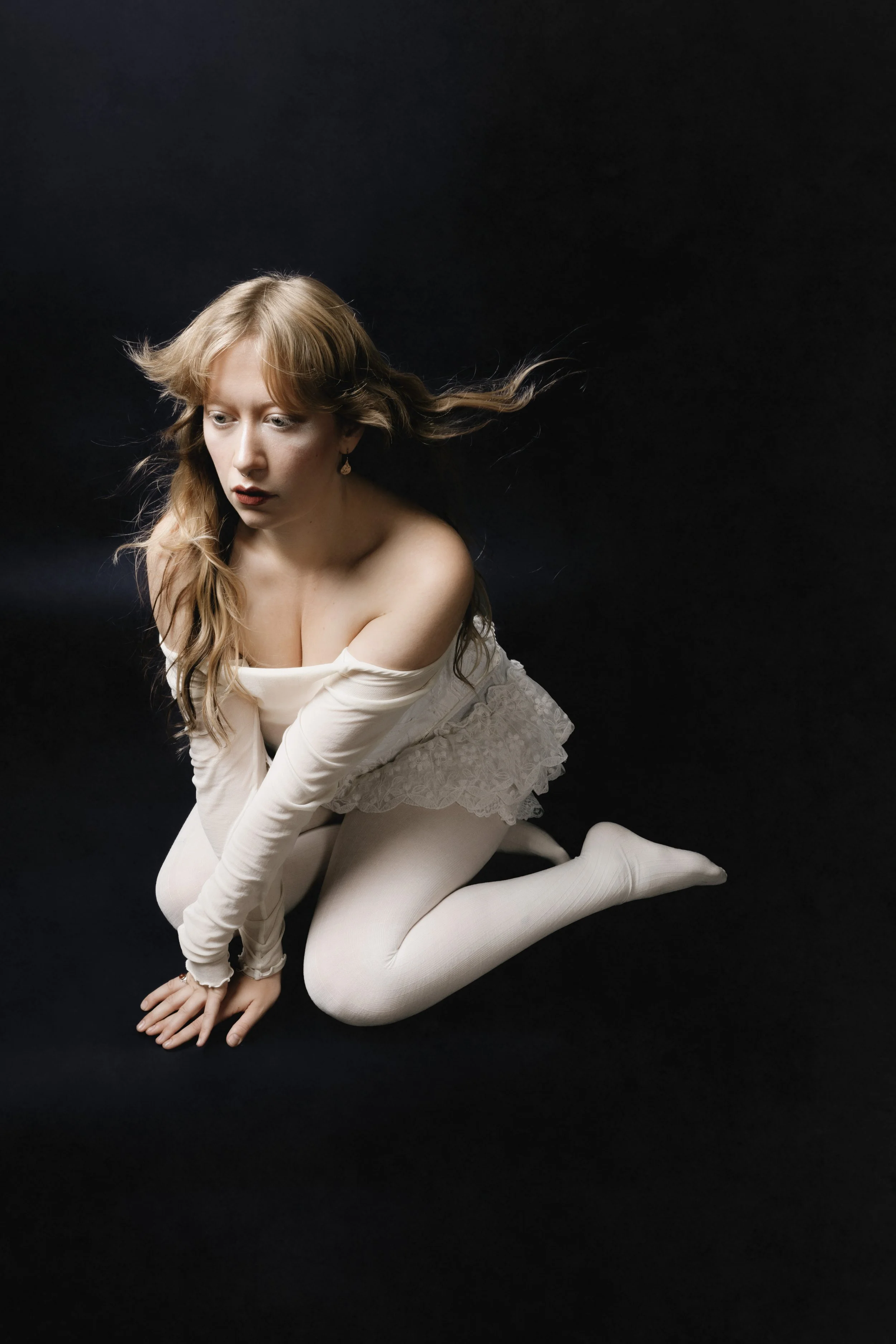
Photo credit: Julie Konstantinovich
Hi sophie-lou, how are you?
You spent 14 years singing with the Danish National Girls’ Choir before exploring classical composition, ambient music and electronic sounds. How did these different musical experiences shape the artist you are today, and what ultimately led you to create sophie-lou?
Hiii Better! I'm good, how are you? And thank you for taking the time to send over these questions:)
Music has always been a big part of my life. My parents were jazz musicians, and I grew up in the world of classical choir music. As I got older, I discovered electronic music and started experimenting with computers, and for the first time, I felt like I could express myself in a completely different way.
At the time, I was working a lot with sound design, but after a while, I felt a strong need to express myself in a more vulnerable and direct way. That's what led me to start writing songs, and I've never felt as free creatively as I do now.
I think I bring a little bit of everything I've experienced into my music. My background in classical music, what I've learned from jazz, and my love for sound design all play a part in the way I create. In a way, sophie-lou became a space where all these different parts of my musical background could come together and exist as one.
Your debut EP, It’s easy to be soft, explored themes of grief and falling in love. Looking back at that release, what did making those songs teach you about yourself, both as an artist and as a person?
I wrote my debut EP during a very chaotic time in my life, as you mention, when I was processing a deep grief while also falling in love. They were the first songs I had ever written, and that period taught me that songwriting can be a way for me to really get to know myself better.
Writing about the situations I was going through helped me make sense of my emotions and see them from a different perspective. In a way, putting my feelings into songs helped me get closer to understanding and processing them. I think I discovered how much songwriting could help me navigate life, not just creatively, but on a personal level too.
Your new single, "2026 we’re in heaven", captures the euphoria of a one-night stand, the longing for intimacy and the emotional crash that can follow. What inspired you to explore this particular experience, and what does the song mean to you on a personal level?
I wrote the song while attending a workshop with the artist Perfume Genius, who I'm a huge fan of. During the workshop, he talked about writing from a mental space he calls "The Swamp” - a place where you allow yourself to be as ugly as you want, and where all the messy, uncomfortable feelings are welcome.
When I started exploring that space, this particular theme came up. It's based on personal experiences I've had while dating, and some of the emotions that can come with it.
After I finished writing the lyrics and shared them with my friends, I was surprised by how many of them could relate to the feelings in the song. It led to some really good conversations, which also helped me process the subject on a deeper level. I think there's something quite special about being able to turn a personal experience into something that other people can recognise themselves in.
You describe the song as reflecting a longing for intimacy in an increasingly disconnected, digital world. Do you think technology has changed the way we connect with people, and do you find yourself longing for more genuine, meaningful connections in your own life?
Yes, definitely. I've occasionally swapped my smartphone for a dumb phone, and it's crazy how much more present I become. Suddenly, I find myself looking at the people on the bus, listening more closely to my friends, and being more aware of what's happening around me.
Unfortunately, there are also a lot of things I need my smartphone for in my work, so it's not always easy to disconnect completely. But I'm actively trying to get better at putting it away and being more present with the people around me. I think it's something I really value and want to make more room for in my life.
The song builds progressively into a crescendo, with vocals evolving from whispered, vocoder-treated passages to powerful, soaring moments. How did you approach the production to make the musical progression reflect the emotional journey of the song?
I worked a lot with my voice specifically on this song. I sang the first verse and chorus quite softly, but used belting in the chorus to really release the frustration in the song.
It's a vocal technique I hadn't really explored before, especially coming from my background in classical choir singing, where the approach to using your voice is quite different. It felt incredibly liberating and was also just a lot of fun to experiment with. I think it helped me express an emotional intensity that I hadn't really allowed myself to explore in my music before.
Your music often explores vulnerable and deeply personal emotions. Do you find songwriting to be a way of processing your own feelings and experiences, and has music ever helped you navigate difficult moments in your life?
Yes, absolutely. Songwriting is something I rely on a lot when I need to process my emotions or make sense of something I'm going through. If I haven't made music for a long time, I often notice that a lot of feelings have started to build up inside me, until I eventually start writing again.
When I'm in a writing period, it almost feels like going to therapy. It gives me a space to explore my feelings, understand them better and work through things that I might not have been able to put into words otherwise.
Mental health is something many artists struggle with, particularly when dealing with the pressures of creativity, expectations and the music industry. How do you take care of your mental health, and have you learned to set boundaries to protect your wellbeing as an artist?
It's definitely not easy. As musicians, we have so many roles, especially when we're expected to write, produce, do social media, and manage so many other aspects of being an artist. It can be difficult to switch between all these roles.
I'm trying to get better at not saying yes to everything and taking a moment to check in with myself before committing to something. I also lean a lot on my partner, who is a musician too. We talk through decisions together, support each other, and remind each other to take breaks when we need them. I think it's really valuable to have someone who understands the challenges of this kind of life.
Having experienced different musical worlds, from classical choral music to Denmark’s underground ambient and electronic scene, how would you describe the music industry today? What has surprised you the most about navigating it as an independent artist?
I've been surprised by how many different things you have to keep track of as an independent artist. I have a lot of colleagues who post on Instagram, Facebook and TikTok several times a day, while also making a lot of music and working other jobs on the side. I really admire them, but at the same time, I often find myself wonderin how they have the energy for it all.
Honestly, I would just love to be able to spend all my time making music. But music is so accessible today, and everyone can make it, which also means that there are only so many opportunities, and you really have to fight to be seen and heard.
Your music has a very maximalist quality, combining electronic textures, layered vocals and intense emotional moments. Is there a particular artist, album or musical experience that has influenced your approach to creating music, or are you more inspired by emotions and experiences outside of music?
I remember the first time I saw someone perform electronic music. I was around 17, and I remember thinking, wow, I've never heard anything so beautiful. The artist was making these really noisy sounds that filled the entire room and almost felt like they were vibrating through my body.
At the time, I was singing in a choir, where everything always had to be completely pitch-perfect, so it was a big revelation for me to experience that music could also be noisy, messy and take up so much space. I think that experience really opened something up for me and changed the way I think about making music.
As you grow as an artist, what are some of the most important lessons life has taught you so far? Is there something you wish you could tell your younger self, especially when it comes to pursuing your dreams and trusting your own path?
I've always tried to be spontaneous in what I do, and to follow my curiosity and what I feel like doing. It's not always easy, but it's something I've learned from my mother, who was also a musician.
I've taken many different paths in my musical life, but those were also paths I needed to take to get to where I am today. So I would like to tell my younger self: "Keep going, you're on the right path. You don't need to worry."
What does vulnerability mean to you, both in your music and in your everyday life? Do you think being vulnerable is something that comes naturally to you, or is it something you have had to learn over time?
It's something I always work on, and I find it really challenging, but also very important, because it allows me to open up, both to myself and to other people, and become more of who I am at my core.
Releasing my first EP was a huge exercise in being vulnerable in front of other people and the outside world. I felt so much anxiety before my first single came out, but I really felt that both releasing the music and performing it for other people helped me become more comfortable with being vulnerable, and realise that it wasn't so scary after all.
I feel the same way about this release. It's a step towards a different kind of vulnerability, but one that I also feel I need to share in order to be more myself.
With "2026 we’re in heaven" closing out the year and more music planned for 2027, what can we expect from sophie-lou in the future? Are there any new sounds, themes or creative directions you're excited to explore next?
Yeees! I've been spending a lot of time in the studio, and I'm really looking forward to sharing all the new songs I've been working on. I've been exploring the sound universe from "2026, We're in Heaven" further, and it feels really good and very right for where my project is at the moment.
Connect with sophie-lou: