
Whiskey Flower
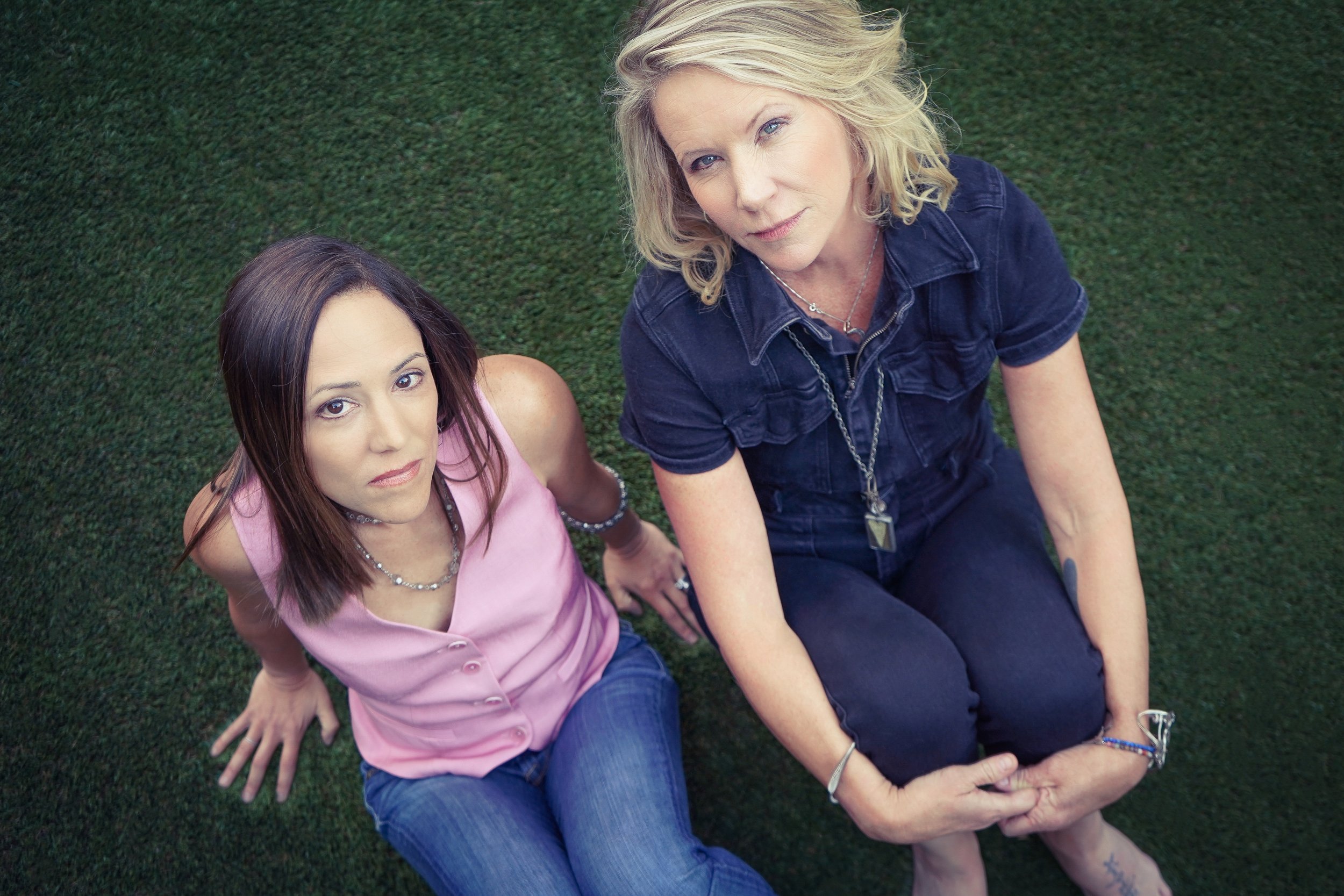
There are musical partnerships that feel manufactured, and then there are those built on time, trust, and lived experience. Whiskey Flower belongs firmly to the latter.
For nearly two decades, Julie and Holly have shared both a life and a creative journey — navigating reinvention, resilience, and radical honesty along the way. What began as separate paths eventually converged into a project rooted in authenticity, emotional complexity, and the courage to choose the long road over the easy one.
With their independently released debut Righteous Indignation and the bold new EP Double Yellow Lines on the horizon, Whiskey Flower continues to carve out space for nuance, defiance, and joy. Their latest single, “Stop Stereo,” stands as both a queer anthem and a declaration of self-definition — fearless, vibrant, and unapologetically human.
In this conversation, we dive into longevity, creative trust, independence, and what it truly means to protect the song above all else.
“Stop Stereo” is out now !
Hi, how are you? What’s your story?
Julie: Hi! I’m well, thank you for asking. At its core, our story is about longevity and choosing the long road. We’ve been partners in life and music for nearly two decades, and Whiskey Flower is the result of a lot of lived experience, creative risk, reinvention, and learning how to trust ourselves and each other again and again.
Holly: I’ve always tried to follow what felt true rather than what felt convenient. That’s definitely bled over into our music and how we move through the world as a musical duo.
How did Whiskey Flower come to life, and what originally brought you together as a musical duo?
Julie: When Holly and I first got together, I had just been signed and was touring across the Southwestern and Midwestern parts of the US. I also had the incredible opportunity to open for Beth Hart on two tours in the Netherlands. Music was already my world, my job, and not to mention, my identity.
Holly: I’m a doctor by trade (shh, don’t tell anyone), but I’ve played guitar since I was five. Music was always there, just not in the foreground yet. Everything shifted in 2011 when Julie’s record label dropped her and her band broke up. What felt like a collapse turned into an opening.
Julie: That’s when Holly picked up the bass, and suddenly we were building something new together. Over the next decade, we played in a variety of band configurations, learning what worked and what didn’t.
Holly: Whiskey Flower officially emerged in 2020, pretty organically and we finally said, this is the project. No filler, no excess, just the truest version of how we sound together. It wasn’t a starting line so much as an arrival.
You’re partners both in life and in music, and you’ve been together for 19 years. How does that shared history shape the way you write, perform, and create together?
Holly: Nineteen years together means we’ve developed a deep musical shorthand. Julie writes the songs. Lyrics and melodies are her domain. Once she brings something in, my role is to respond. I write the bass lines, and that’s where our conversation really begins.
Julie: There’s a lot of trust, and a lot of honesty. We’ve lived through enough highs and lows that we don’t protect our egos. We protect the song.
Holly: And sometimes that looks like couples therapy.
Julie: Yes. And sometimes that couples therapy happens on stage. It’s actually pretty humorous.
Holly: Ha, yes! But that back and forth is what shapes the harmony, both vocally and creatively. We trust each other enough to disagree, and the song is always better for it.
Your music is often described as deeply honest and resilient. When you look back at your early songs, what themes have stayed with you from the start?
Julie: Music was the place where I could tell the truth before I knew how to say it out loud. In my earlier artist chapters, I wasn’t fully “out,” and songwriting became a way to speak things I didn’t yet feel safe naming directly. If I wrote them universally enough, they could live in the song without being exposed. In a very real way, that process saved my life. The through line has always been using music as a place for honesty, even when I didn’t yet have the language for it.
Holly: That honesty shows up now as a refusal to be flattened. Emotionally, musically, personally. We’ve both lived enough as humans to say to hell with tidy answers or neat boxes. From the beginning of Whiskey Flower, the songs have held complexity and allowed space for becoming, rather than declaring something fixed.
Your debut album Righteous Indignation came out independently in 2023. What did that record represent for you at that moment, and what have you learned since?
Julie: Righteous Indignation was us finding our voice on our own terms. It was the first time as a songwriter that I didn’t ask permission, didn’t soften the edges, and didn’t try to fit into anyone else’s expectations.
Holly: Releasing it independently taught us patience and self trust. We learned that independence does not mean doing everything alone. It means choosing alignment, building community, and staying connected to why you started in the first place.
In 2024, “Why Not?” received a HIMA nomination. How did that recognition impact your confidence or direction as artists?
Julie: Honestly, I was shocked! It wasn’t something we expected, and we received it with a lot of gratitude. It reminded us that you can lead with honesty and still be met with resonance.
Holly: It didn’t change our direction as much as it encouraged us to keep going. Moments like that help quiet the doubt that creeps in and remind you that the work is landing somewhere beyond your own bubble.
You’re now preparing the release of your new EP Double Yellow Lines. Conceptually, what does this next chapter represent for Whiskey Flower?
Julie: Double Yellow Lines is about thresholds. What happens when you stop playing it safe and cross into something truer. It’s about creating boundaries, taking risks, and choosing forward motion even when it feels uncomfortable.
Holly: There’s more confidence in this chapter. Less explaining, more clarity. We’re trusting what the songs want to be.
“Stop Stereo” is the first single from the EP and feels like a bold statement. How was the song born, and what sparked its message?
Julie: It didn’t come from one moment. It came from becoming aware and observing patterns of human behavior. Personally for me, after years of staying under the radar and letting other people define my narrative, that silence started to feel heavier than the risk of speaking up.
Holly: Ya - personally, culturally, musically, it all converged.
Julie: “Stop Stereo” is that tipping point. It’s about cutting through noise, pushing back on stereotypes, and choosing to be heard.
The track confronts stereotypes and pressure to conform. Was there a specific personal or cultural moment that pushed you to write it?
Holly: It’s all of it, everywhere. It’s about being reduced, whether that’s queerness, age, or assumptions about how women are supposed to show up. Us humans are funny creatures with our tendency to box people in and label them because it feels easier and more comfortable.
Julie: The song is us pushing back on that. None of us are just one thing, one sound, or one story.
As a queer anthem, “Stop Stereo” feels both defiant and joyful. What do you hope LGBTQ listeners and allies feel when they hear it?
Holly: I hope people feel it physically. Like something wakes up in their body. Bold, a little dangerous, and joyful.
Julie: And I hope it surfaces even the tiniest granule of belief inside of people that they don’t need permission to be who they already are. If it feels like both a release and a reminder, then it’s doing what we hoped.
Working again with producer John Would and drummer Kristen Gleeson-Prata, what sonic elements were especially important on this new material?
Julie: John has an incredible ability to hear the emotional center of a song immediately and build around it without crowding it. He helped us trust the rawness and let things feel big without overproducing.
Holly: KGP (Kristen) brings power with restraint. It’s not about fancy playing. It’s about feel. Working with them feels grounded, expansive, and creatively safe.
As artists, what are the biggest challenges and the best parts?
Holly: The best part is connection. When someone tells you a song made them feel less alone, that never gets old.
Julie: Ya, agreed. And I’d say the challenge is vulnerability. Putting something real into the world without knowing how it will land.
In your opinion, what would make the world a better place?
Holly: More listening. Less labeling.
Julie: True freedom to be individuals without fearing punishment for it.
Finally, as you look ahead to the release of Double Yellow Lines, what excites you most about what’s coming next for Whiskey Flower?
Holly: Playing these songs live and letting them meet people where they are.
Julie: Yes. That! I’m most excited about taking these songs into rooms and feeling that shared energy. There’s something powerful about watching people recognize themselves in the music in real time.
Connect: