
Carmie
With her new EP Side B Stories, Danish artist Carmie takes us on a journey through memories, relationships, love, heartbreak and all the messy little stories that shape who we become.
Inspired by her lifelong love of country music and artists like Dolly Parton, the EP marks a return to a sound Carmie first fell in love with as a teenager — this time with the confidence to fully embrace the music that feels most authentic to her. From teenage romance and dating apps to emotional labour and finding safety in a relationship, Side B Stories turns personal experiences into honest, relatable songs filled with warmth, irony and humour.
Following the release of Learn To Live in 2025, a year of international performances, showcase festivals, GAFFA recognition and Track of the Week selections, Carmie has also grown more confident in trusting her own artistic voice. I caught up with her to talk about the stories behind Side B Stories, her love of country music, co-producing the EP with Rasmus Vigant, and learning to look back at life — without taking ourselves too seriously.
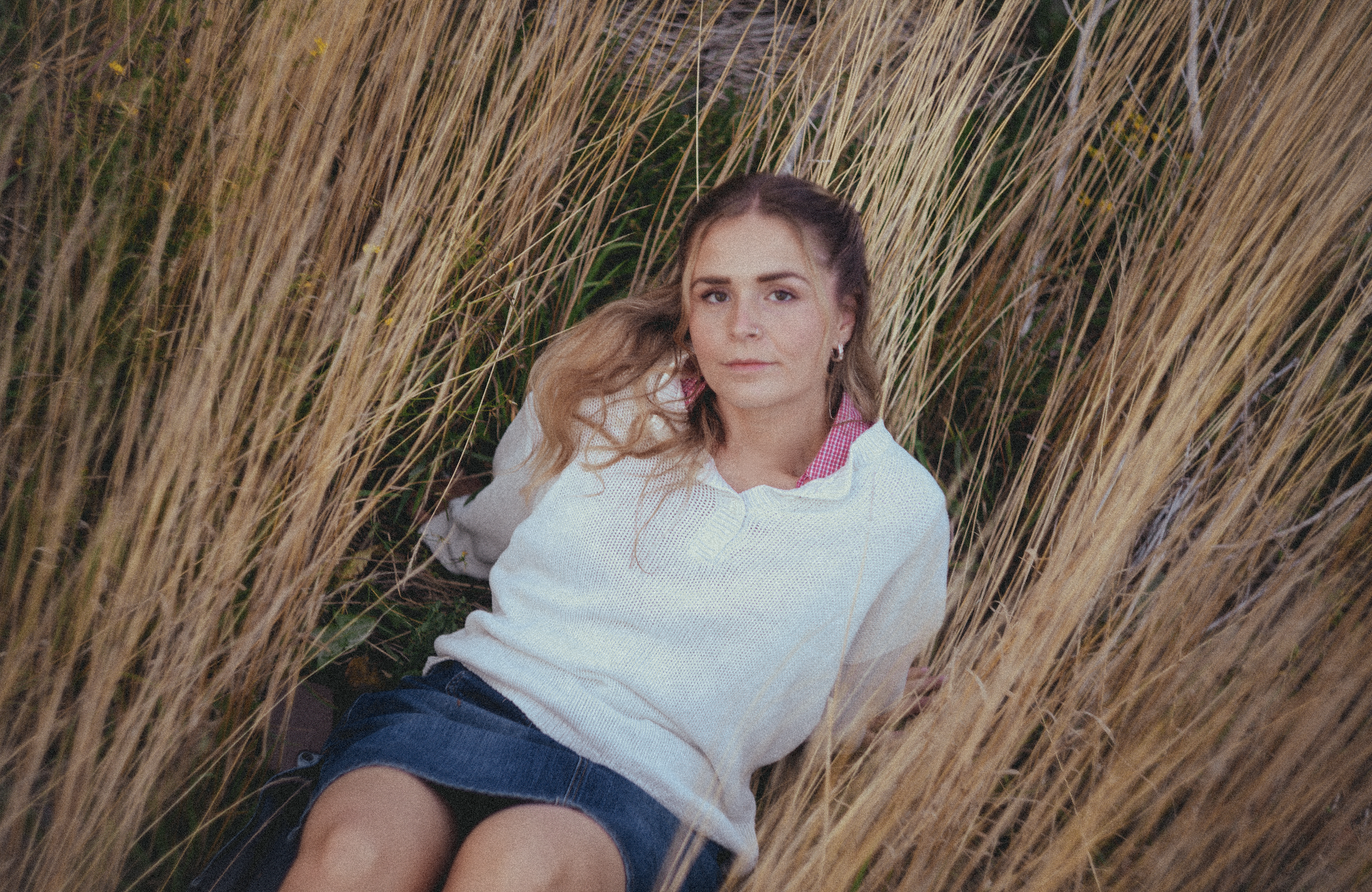
Photo credit: Alec Andreev
Your new EP is called Side B Stories. What does this title mean to you, and why did it feel like the right title for this collection of songs?
When I was a teenager, I bought myself a record player and started listening to vinyl records from my favorite bands. I fell in love with the whole experience of listening to music that way. As you know, there’s always an A-side and a B-side on a vinyl record. The B-side is often where you find some of the more personal songs, or the songs that didn’t quite make it onto the A-side.
My EP is about people who have made an impact on my life, but who are no longer a part of it. So, I started thinking of these stories as my own “Side B Stories” — the stories and memories that might not be part of my life anymore but still shaped who I am today. It just felt like the perfect title for the EP.
You’ve loved country music since you were ten, listening to artists like Dolly Parton. What is it about country music that has always felt like home to you?
I grew up in the countryside, and when I first started listening to country music and heard songs describing nature and life in the countryside, it really resonated with me. Even though a lot of country songs are about whiskey and cowboys, I always felt there was something very calm and comforting about the melodies, chord progressions and lyrics. There’s often a kind of honesty and simplicity in country music that I really love.
And then there’s Dolly Parton. She was just one of the most talented songwriters ever, in my opinion. I think she’s a huge inspiration when it comes to telling stories through music.
You’ve described this EP as a direction you’ve always felt drawn to. Was there a particular moment when you realised, “This is the sound I really want to make”?
Actually, I started writing country songs when I was 17. But all of my friends were listening to completely different kinds of music, and that made me insecure about sharing my own songs with people.So I started writing pop music instead, which turned out to be a huge experience for me and taught me a lot about songwriting and production. But I think the country sound was always somewhere in the back of my mind.
With Side B Stories, I finally felt confident enough to go back to something that had always felt natural to me and make the kind of music I genuinely love.
Many of the songs on Side B Stories come from very different personal experiences — teenage love, dating apps, relationships and everyday life. Do you find it easier to tell the truth through songwriting than through conversation?
Yes, definitely! I find it quite difficult to share these kinds of stories without adding a bit of irony or humour. That’s just how I naturally talk about things. I’ve shared all of these stories with my girlfriends, and when I write songs, I actually try to write them in the same way I would tell the story to them. So even when the subject is emotional or personal, there’s usually a bit of humour orself-irony in it. I think that makes the stories feel more honest to me.
“Stranger In The Park” looks back at a teenage romance that only lasted a month but clearly left a lasting impression. What made you want to revisit that particular memory years later?
I revisit a lot of memories from my life. I really enjoy trying to understand why and how I became the person I am today, and which people and experiences have shaped me along the way. And this particular memory was just so emotional for me that I find it hard not to look back on it sometimes.
Even though it only lasted a month, it obviously meant a lot to me, and I think some people can have a much bigger impact on us than the amount of time we spend with them would suggest.
“Boy, I’m A Woman” has a playful but very pointed message about relationships and emotional labour. How important is humour to you when you’re writing about things that can actually be quite frustrating?
It’s really important to me. Going back to what I said before, I find it difficult to share these kinds of stories without a bit of irony and humour. And messages like the one in “Boy, I’m A Woman” are also how I would normally communicate with my boyfriend or my friends. I’ll make a joke about something, but there’s usually a very clear message underneath it.
I think humour can make a serious point feel more relatable — and sometimes you can actually say more when you don’t take yourself too seriously.
“Reputation To Maintain” was inspired by a friend’s experiences with dating apps. What fascinates or frustrates you most about the way modern dating has changed the way we connect with each other?
What really frustrates me is that people sometimes don’t treat each other properly when they don’t know each other yet. I’ve heard so many stories about people cancelling a date five minutes before, simply not showing up, or leaving someone on “read” without giving it a second thought. Because you might never see that person again, it can feel like there are no consequences to how you treat them.
But what we sometimes forget is that there’s still a human being with feelings on the other side of the screen. And honestly, I see the same tendency not just on dating apps, but all over social media. We’re so connected, but sometimes it feels like we’re forgetting how to actually treat each other like people.
“Safe Space” is about the sense of security you’ve found with your current partner, while “First Flight To France” tells a story about two people falling in love at very different speeds. How much of your songwriting comes from observing relationships, and how much comes directly from your own life?
Everything comes from my own life, or at least from stories I’ve heard from friends or family. I find it most authentic to write about things I’ve experienced myself, but I also love taking inspiration from the people around me. Sometimes a friend tells me a story, and I immediately think, “That’s asong.I think songwriting is a way of making sense of both my own experiences and the experiences of the people I care about.
You’re credited as co-producer on the EP alongside Rasmus Vigant. What did you learn about yourself as an artist by taking on that role in the production process?
I really like being part of the whole process. And besides being my producer, Rasmus is also a very good friend of mine, so we had a lot of fun making these songs together. He really let me be part of the production process, which was very educational for me. I learned a lot about how I hear music and, maybe even more importantly, how to communicate what I hear in my head to someone else.
Since releasing Learn To Live in 2025, you’ve played showcase festivals, performed internationally, been named an artist to watch by GAFFA and had two singles chosen as Track of the Week. Looking back at the past year, what has changed most — in your music, your confidence, or in the way you see yourself as an artist?
What has changed the most for me is the belief that if I write the music I genuinely enjoy. I used to think a lot about what other people might like or what I was supposed to sound like. Now I’m much more confident in trusting my own taste and personality.
I’ve realized that I don’t need everyone to like my music. I just want the right people to hear it and feel that it means something to them.
Finally, if Side B Stories could leave listeners with one feeling or one thought after they’ve listened to the whole EP, what would you want that to be?
I think I’d want people to feel that it’s okay to look back. And I hope you can listen to the EP, recognize a little bit of yourself in the stories, and maybe even smile at some of the messier parts of love and life. Because I think that’s what Side B Stories is really about: looking back at the things that shaped us — with a little of humour, and hopefully without taking ourselves too seriously.
Connect with Carmie: