
Sarah Smith
For Sarah Smith, music has always been another way of expressing what words alone can’t quite capture. Having started performing as a dancer from a young age, she eventually found her voice through singing and songwriting, developing an artistic world shaped by dramatic pop, nostalgia and deeply personal emotions.
Her latest single, “Point of No Return”, explores the complicated space between craving intimacy and wanting to run from it — touching on anxiety, self-sabotage, the desire to feel chosen, and the ways we sometimes distance ourselves from our own feelings. With its cinematic quality and emotionally charged melodies, the track turns inner conflict into something expansive and cathartic.
As she continues to develop her sound and artistic identity, Sarah opens up about her journey from professional dancer to singer-songwriter, the role of music in understanding her emotions, working alongside her twin brother, and the life lessons that have helped her let go of what she cannot control.
“Point of no Return” is now available everywhere.
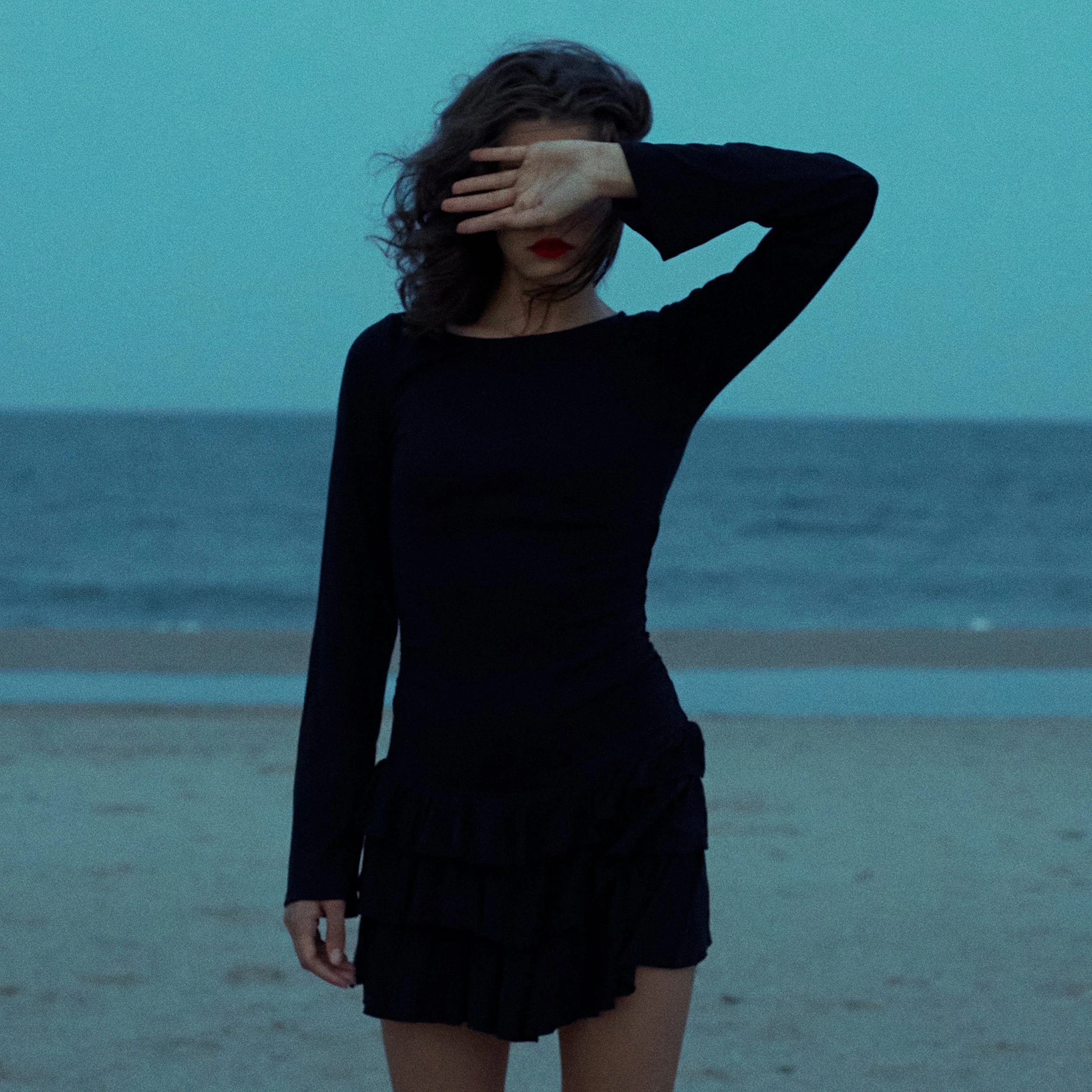
Hi Sarah, how are you? And for those discovering you for the first time, what’s your story? How did you find your way into music and become the artist you are today?
I’m great, thanks for having me. I’ve been performing in some form for most of my life. I started dancing before I could even walk, and even though I was a really shy kid, performing became a way for me to come out of myself. As I got older, that evolved into singing and eventually songwriting. So “finding my way into music” has been more so “finding different ways to evolve within music” and understanding what it means to me at different points in my life.
“Point of No Return” explores the tension between wanting to feel chosen and secure while simultaneously resisting intimacy. What was happening in your life or in your mind when you first started writing this song?
Honestly, not much was happening in my life, which I think actually fueled the song. I was in this place of sitting in my own sadness while also asking myself, “What am I doing?” I liked the idea of being the “favorite girl”—it became a way of imagining a version of myself who could be THAT girl, even if I didn’t necessarily feel like her at the time.
You describe the song as being “for the anxious-avoidant girlies.” How did you want to capture that push-and-pull between craving connection and wanting to run away from it?
The tension of that unresolved feeling is captured through the melody itself. For example in the chorus, I speed up the cadence of the last few lines — “she must confess / want nothing less / what do you want from me?” I like how those three lines bleed into one another, quickly spiraling towards an admission that immediately turns to deflection.
There’s an interesting moment in the song where you split yourself into an “I” and a “she,” almost as if you’re watching yourself from the outside. Why was that perspective important to the story you wanted to tell?
I think it just felt true to my experience writing it. Those parts of the song actually came out first, where I instinctively painted myself as this other character. It became a way of acknowledging how I was treating myself before I even realized I was doing it, let alone understood what I was trying to say.
The song has a very cinematic, almost nostalgic quality despite dealing with anxiety and self-sabotage. What is it about dramatic pop that allows you to explore heavier emotions in such a visually and emotionally expansive way?
Growing up as a dancer, I always experienced emotion in music in a really physical way—movement could take a feeling and make it bigger, and therefore more cathartic. I approach pop similarly. For me, the drama gives heavier emotions somewhere to go.
You’ve mentioned growing up with Tumblr-era pop and the music of the recession-pop era. What do you think that period of pop music gave you as an artist, and what elements of that world still influence your sound today?
I think that era taught me how expansive pop could be within “the formula.” It could be really polished and accessible while still having a very distinct point of view. But I think a lot of it is also just what I grew up knowing. My favorite pastime was watching John Hughes movies and listening to CHVRCHES, so that heightened sense of expression in music and film naturally became part of how I learned to express myself during my most formative years.
You worked with producer Carlos Ruiz on the track, and your twin brother Jason helped refine the lyrics and melodies. What did each of them bring to “Point of No Return” that helped turn the original idea into the song we hear today?
Carlos really helped shape the sonic world of the song and turn the initial ideas into something cohesive; it was actually two separate songs at first! If I remember correctly, one was called “Nothing Less,” which became the root of the hook as we know it, and the other was “Apologies to My Future Lover,” which birthed the phrase “Point of No Return”. Beyond the song itself, there was so much encouragement from him to keep opening myself up and to run with this idea.
Jason came in once the foundation of the song was there and helped refine cadence, ad-libs, and “melodic math” if you will, only adding to the world we were building. He has a way of understanding what I’m trying to say or do, even when I haven’t completely figured it out myself, but I think that’s definitely part of just being a twin, haha.
Before becoming a singer-songwriter, you were already performing professionally as a dancer, including work with the Brooklyn Nets and Nickelodeon. How has your experience as a performer influenced the way you approach songwriting and recording?
I don’t know if it’s a reflection of my dancer self or just my personality, but I’m definitely a perfectionist with both. I think the performance of a recording can radically change how a song feels, so I’m very hyper-aware of that throughout the process. This song was written a year ago, but it took that full year for me to feel like the performance was right.
Mental health and emotional wellbeing seem to be closely connected to the themes you explore — anxiety, self-sabotage, intimacy and the desire to be seen. Has writing and making music become a way for you to process your own emotions or better understand yourself?
Yes, for sure. A lot of the time, writing is how I figure out what I’m feeling in the first place, not the other way around. That process can uncover a lot of what’s happening under surface level.
Looking at everything you’ve experienced so far, what are some of the biggest life lessons you’ve learned that you carry with you — both as a person and as an artist?
I’ve learned not to agonize over things I can’t control, and that for the most part, no one is thinking about you as much as you think they are. I find those two sentiments freeing.
Your music explores getting older, intimacy, self-sabotage and the ways we perform ourselves for other people. Do you think becoming more comfortable with yourself has changed what you’re willing to reveal through your music?
I’m much more interested in playing with perception as I’ve gotten more comfortable writing.
“Point of No Return” is only your second single. As you continue developing your artistic identity, what do you hope people will understand about Sarah Smith and her world when they hear your music?
I don’t necessarily need people to understand me, but I hope they can relate to some version of themselves through what I’m creating. I think there’s something in it for everyone.
Connect with Sarah: