
Sweetbreads
Through heartfelt storytelling and raw vulnerability, Sweetbreads turns life’s most complex emotions into deeply relatable songs. Exploring themes of anxiety, mental health, relationships, and the search for meaning, her music invites listeners to embrace vulnerability with compassion rather than fear.
Following the release of her new single “Open Mic”, the first glimpse into her debut album Punisher of Love, arriving this September, I caught up with the artist behind the project. In this conversation, she opens up about the inspiration behind her songwriting, the emotional realities of pursuing a career in music, the importance of community, and how creativity has become a way of processing life’s uncertainties.
An honest and heartfelt conversation about resilience, empathy, and the courage to keep creating.
“Open Mic” is now available worldwide.
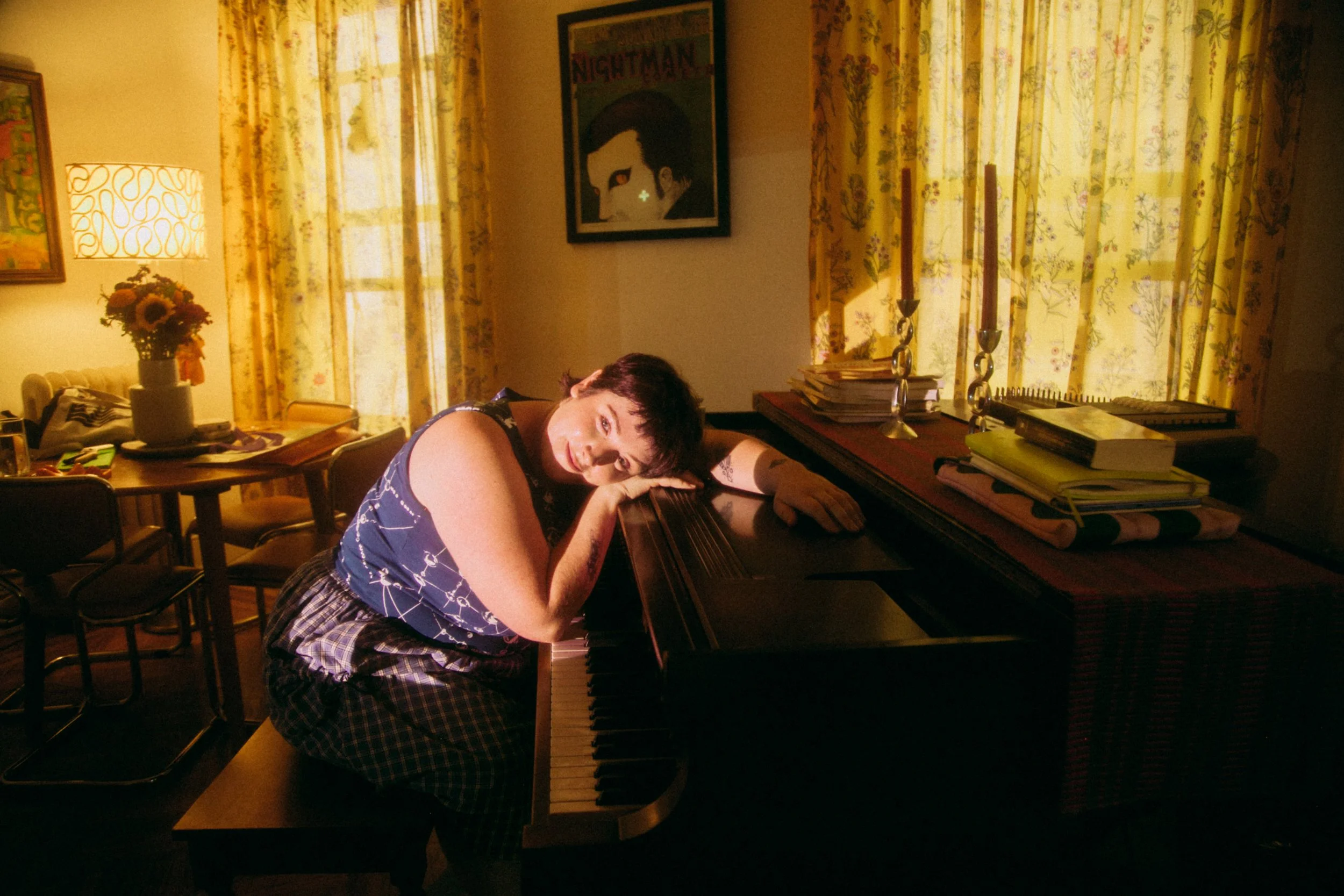
Photo credit: Sandy Honig
Hi Melody, how are you? What’s your story?
Hi! I’m great. Thanks for talking with me. I’m a singer-songwriter based in Ridgewood, Queens. I’ve been playing and living in New York City for about 10 years and I’m finally releasing my first LP, Punisher of Love, in September! I'm very excited about it!
Congratulations on the release of “Open Mic”! Looking back at the writing process, what emotions were you hoping listeners would carry with them after hearing the song?
Thank you! Well, the song is definitely for other musicians struggling with the industry right now. I hope anyone who is a songwriter, or is trying to pursue art in any capacity, can find some solace in “Open Mic”. It’s getting harder and harder to chase creative dreams. My hope is this song makes people feel less alone. And that their art- and lives- are significant.
« Open Mic » was inspired by witnessing a close friend struggle with addiction while reflecting on your own relationship with music and ambition. Was writing this song a way of making sense of those emotions yourself?
Yes. Writing “Open Mic”, specifically, was a long process. The night that inspired the song stirred up a lot of conflicting emotions for me. I had to sit with the discomfort they brought for a while to figure out what the heck the song was about. I came across this poem, “Watching My Friend Pretend Her Heart Is Not Breaking” by Rosemarry Wahtola Trommer that helped it all click. I think watching my friend struggle that night made me feel so uncomfortable because I couldn’t really help her or fix her problems. That combined with being at this open mic where I felt kind of desperate and insignificant made me feel really out of control. Writing the song helped to release that.
You describe music, ambition, and even success as things we can sometimes cling to in order to escape reality. How do you personally recognize the difference between healthy passion and unhealthy obsession?
The line is a fine one! I read something by Patti Smith once that said the artist never stops working because they are constantly observing life through a lens. It can be hard to tune out the narrative perspective in your head as a creative person. When I find myself thinking too much about solutions and making logical sense of the chaos of life, it can become unhealthy. I find myself caught in black and white thinking and loose presence and a sense of play. When I slide into obsession, I feel isolated. Healthy passion feels joyous and collaborative.
Your songs often explore anxiety, relationships, and the complexities of everyday life with remarkable honesty. Has songwriting become a form of self-care or emotional processing for you?
Yes, when I’m brave enough to do it! It can take me a very long time before I finally sit down to write something. I’ve always wished I was more disciplined as a song writer, but, on good days, I can see that my emotional avoidance, anxieties, and ruminations are part of my process too. When I do that, it allows me to feel some grace toward myself. That’s usually when I face myself and finally put the pen to paper.
That is why I named my project “Sweetbreads.” Sweetbreads, the food, are internal organs. Songwriting can sometimes feel torturous - like I’m spilling my guts out. But, ultimately, making it through the process and finishing a song feels really good.
Mental health conversations are becoming more open within the music industry, but many artists still face pressure to always appear successful or resilient. Have you ever felt that pressure, and how do you navigate it today?
Oh my gosh, all the time. I’m a big people pleaser. I feel so grateful to have people who support me and my music. Sometimes I feel self-imposed guilt which makes me feel like I’m not doing enough. Musicians are spread so thin these days. It’s really hard to make art and then figure out how to market it (and yourself as a brand) on platforms that are designed to make you compare yourself to others. I oscillate between wanting my work to be noticed and the fear of being perceived constantly. I don’t know… Therapy has been very helpful for me. When I’m feeling a lot of self doubt, I try to focus on my values and make decisions and create boundaries based on those. And that usually brings me back to music and my community. That is grounding.
Since committing fully to music in 2020, what has been one of the biggest lessons you’ve learned—not just as an artist, but as a person?
I’ve learned to push through fear and embarrassment. It’s not a perfect practice, but I can tell when I'm feeling scared or humiliated and move through that discomfort more easily now. Sometimes it helps to remind myself that no one really knows who I am or cares about what I’m doing as much as I do. And if people are paying attention, it is usually because they are hoping I succeed. That thought can be freeing and take some of the pressure off.
The music industry can be incredibly rewarding, but also emotionally demanding. What’s something you wish someone had told you before pursuing music full-time?
Take breaks (especially from technology). Set clear boundaries and small goals for yourself as you go. Stay flexible because those boundaries and goals will evolve with your career. Celebrate small wins!
Your music feels deeply empathetic, almost as though you’re inviting listeners into a conversation rather than simply telling a story. How do you strike the balance between vulnerability and protecting your own emotional well-being?
Thank you. That is what I always aspire to do. I change names if my song is about people I interact with in real life! And I write in third person a lot which helps me feel less “woe is me” and gives context to my feelings in the grander scheme of the human experience. I think even my songs in first person feel like a character a little bit in my mind because they are about very specific times in my life. I’m not the same person I was when I wrote the song and that’s a good thing!
Punisher of Love explores love, identity, and the stories we tell ourselves. During the making of the album, did you discover anything surprising about yourself?
Recording has always been a huge learning process for me. I had the opportunity to collaborate with a ton of incredible musicians for this record. I learned collaboration is my favorite part of making music. With that being said, I also learned I need to speak up for what I intuitively believe is right for the song, even if I feel like the least skilled musician in the room.
Looking back, is there a song on Punisher of Love that challenged you emotionally more than the others? What made it particularly difficult—or meaningful—to write?
“Two Steps Forward, One Step Back” is a song about my family. It was the last song I wrote for the record and the last song we recorded. I almost didn’t include it when I was planning the track list. I was worried it was too personal, too on the nose, and I was afraid of what my family might think of it.
I hadn’t shared the song with many people before we took it into the studio, but the band loved the song. Recording it was very special. We did it all together, as one full take, around one mic. I felt so supported by everyone in the room. Quinn, my producer, sent me the bounce the next day and I shared it with my family. My mom, my dad, and my brother each called me after they heard it and we had some great conversations. That meant a lot to me. It’s my mom’s favorite song on the record!
You’ve built a supportive creative community around your music. How important has that sense of connection been in helping you stay grounded through the highs and lows of being an independent artist?
It always feels good to show up at a show and feel like I’m just at a party because so many people I love are there. I’m an extrovert, so community is really important to me. I need to bounce ideas off of others, and I’m lucky to have so many incredible musicians in my orbit that I can nerd out about music with. When I focus on my friendships within music, it feels less like a hustle, more about the craft, and I have way more fun.
If someone listening to Open Mic is currently struggling with anxiety, addiction, or simply feeling lost, what would you hope they take away from your music?
I hope people feel empowered to express their needs and feelings to the people closest to them after listening to my music. Your feelings are valid and you matter. I hope my music reminds people of that.
Finally, when listeners reach the end of Punisher of Love this September, what conversation—or feeling—do you hope continues long after the album is over?
Self love is an act of resistance. Holding empathy for others and for yourself creates a healthier society. I hope “Punisher of Love” can help reinforce that idea.
Connect with Sweetbreads: